Pay My Bill
View My Projects
Skip to main content
Solutions

Our Solutions

Explore the comprehensive range of tailored solutions Madison offers to address your energy needs.

Introducing MEI+Spotlights

For Customers

For Partners

NewsSpotlightsAbout
Contact
MEI+
Solutions
For CustomersFor Partners
NewsSpotlightsAbout
Contact
Pay My Bill
View My Projects
Newsletter
No items found.

Compounding Small Advantages into BIG WINS

April 14, 2026

Download resource

Thank you! Your submission has been received!
Oops! Something went wrong while submitting the form.
Newsletter
No items found.

Compounding Small Advantages into BIG WINS

April 14, 2026

Get our newsletter

Clean energy news and insight delivered to your inbox.
Thank you! Your submission has been received!
Oops! Something went wrong while submitting the form.

Would you rather have $1 million in cash today, or start with a single penny that doubles in value every day for 31 days?

You probably know the answer. The penny wins, and it’s not even close. By day 31, you are sitting on $21.5 million.

It’s hard to wrap your mind around the power of compounding—during just the last four days of the 31-day period, that single penny’s value skyrockets by an additional $20 million. I never get tired of these math exercises, even if my brain still resists fully internalizing them. What is clear, though, is that compounding is a force. Einstein called it the eighth wonder of the world for a reason.

That idea sits at the core of how we think at Madison. Our motto, “small advantages, BIG WINS,” reflects it directly. Bezos said it well: “We do not have a single big advantage, so we have to weave a rope of many small ones.” The math above is just a cleaner way to say the same thing. Seemingly insignificant edges, applied consistently over time, produce outsized results.

This concept was front and center at our most recent executive offsite. Twice a year, we step away as a leadership team for a few focused days. Alongside deep dives on key strategic initiatives, we also pre-read a selected book, discuss and debate it as a group, and then use it as a lens to examine how we’re operating. Past selections include books on the modern real estate era, behavioral psychology, logistics, tennis, and more. We draw inspiration from eclectic sources.

This time, we read The Compounders, a deep dive into a set of under-the-radar businesses that have quietly built extraordinary long-term value.

(Fair warning: It is a great book. It is also dense—think graduate seminar on niche industrial companies. I personally love that kind of thing, but the team did remind me this is not a universal preference. I stand by it.)

Companies featured in The Compounders include Constellation Software, Heico, and a group of Swedish industrial operators like Bergman & Beving, Addtech, Lagercrantz, and Indutrade.

The Swedish angle is worth a pause. Sweden represents roughly 0.13% of the world’s population, yet consistently contributes closer to three times that in global GDP. That’s not luck and reflects the long-term, systems-oriented mindset deeply embedded in many Scandinavian companies.

I’ll acknowledge a touch of bias here, but we see this philosophy up close ever day with EQT, our Sweden-based investor. Their approach, rooted in a foundation built by the Wallenberg family, centers on an ethos of “more than capital” and “future-proofing” the businesses they invest in to succeed in tomorrow’s economy and deliver lasting value.

Despite our connection with EQT, I came to the book independently and the patterns are hard to ignore. The traits that show up again and again across the  featured companies—discipline, decentralization, patience, and a commitment to building businesses that last—are the exact qualities we admire in EQT and the ones we are working to reinforce at Madison.

Decentralization, with a sharp edge

Across every company, decision-making authority is pushed as close to the customer as possible. And importantly, they mean it.

Constellation gives business unit leaders what they call “hunting licenses” to pursue acquisitions independently. Lagercrantz prioritizes responsiveness above all else. Heico’s Fort Myers team needed a generator after a hurricane. List price was $500,000. They found one on eBay for five percent of that.

This kind of decentralized behavior does not come from a policy manual. It comes from a culture that trusts its operators to act. A line that stuck with me from Ametek: “Freedom carries a sharp edge.” Autonomy is not soft. It is demanding. High accountability environments do not repel strong operators, they attract them.

I recently came across a quote from former Naval officer David Marquet that fits well here. He described a broken model where the people at the top have all the authority but none of the information, while the people on the front lines have all the information but no authority. The best organizations close that gap. It is not easy and it is never fully solved, but the ones that get closest win.

This is consistent with how we think. Our theme in 2026 is simple: Pressure is a privilege. We believe empowering those closest to our customers and deals is a critical advantage to our success.

People are the only sustainable advantage

These companies show what happens over decades when you invest in people and let learning compound. Internal promotion is the rule, not the exception. Long tenure is celebrated. Knowledge sharing is structured, not left to chance.

Bergman & Beving codified their culture of learning in a document called “The Book About Idea and Soul.” Addtech built an internal business school. Lagercrantz hosts annual sessions on pricing and entrepreneurial thinking. Constellation runs post-acquisition reviews where decision-makers revisit past deals and assess what actually happened.

The common thread is simple. Learning compounds when it is intentional.

We think about, and more important, constantly apply this concept at Madison. Core weeks, quarterly gatherings, mentorship structures, and an educational stipend available to every team member are all designed with this in mind. It’s the value of a culture centered on learning together. You can’t outsource it, and you can’t fake it. You build it one decision at a time.

Incentives aligned to the long term

The idea is straightforward, but execution matters.

At Constellation, senior leaders are required to put 75 percent of their bonus into company stock, held for at least four years. At Judges Scientific, a meaningful portion of employees own shares.

The goal is alignment. The people running the business should feel like owners because they are. Simple goals reinforce this. Bergman & Beving targets doubling earnings every five years. Addtech targets 15 percent annual profit growth with clear capital efficiency thresholds.

Simple does not mean easy. It forces clarity and removes room for ambiguity.

We take a similar approach at Madison and end each year by clearly articulating the theme, key strategic initiatives, and goals at the individuals, team, and company level for the following twelve months. We keep it simple and refer to our primary targets as the “Big Three” to maximize transparency and eliminate any confusion about what winning and success looks like. All this results in a stronger ownership mentality for everyone at the company.

Spend time with your best customers

The Compounders returns to this theme repeatedly. Heico’s relationship with Lufthansa is a good example. They spent years embedded as a partner, not just a vendor. Over time, that trust compounded to the point where Lufthansa became an investor. That is a different level of relationship.

Ametek tracks a “vitality index,” measuring how much revenue comes from products introduced in the last three years. It forces ongoing innovation rather than reliance on legacy products.

We took inspiration from that and built our own version. Our internal value creation metric, built on years of underwriting data and enhanced with AI, gives us pricing power and flexibility. Same concept, applied to our business.

Acquisitions are ultimately a people game

One story from Heico stood out. In a sale process the company was participating in, the seller asked each buyer the same question: What happens to my people? Most dismissed it. Heico leaned in and won the deal.

Constellation has built a reputation where founders trust them with their life’s work. After an acquisition, names stay, cultures are preserved, and people matter. Judges Scientific operates the same way. For many founders, price is not the only driver. Legacy matters.

If you can understand the motivations and incentives of the people selling and genuinely care about meeting their expectations and delivering a satisfactory result, everyone wins.

We think about this every time we are working on a large transaction, whether it is to buy a portfolio of projects or an entire platform like we have done now three times over.

Bringing it back to Madison
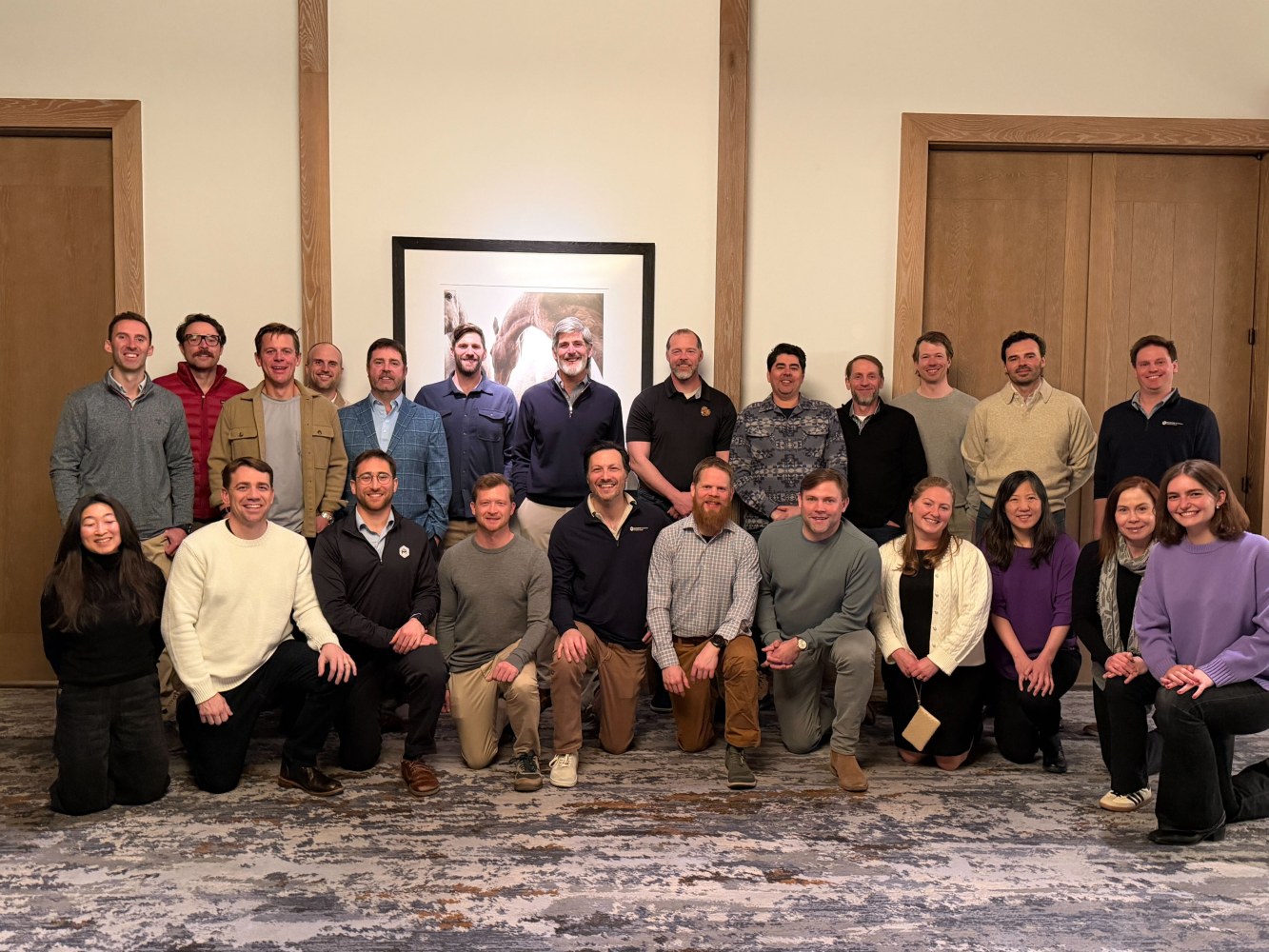
Article content
The MEI Executive Leadership Team at the Winter Offsite

Not every lesson or company from The Compounders maps directly to our world. These are not capital-intensive infrastructure businesses. They are not juggling equity, tax equity, and debt to grow. But the principles translate cleanly.

If there is one thing we took from this book, it is this: investors (and humans) consistently overestimate short-term growth and underestimate long-term durability. They think linearly when they should be thinking exponentially.

The companies in The Compounders are not chasing moments. They build systems that last. They prioritize people over process, decentralization over control, and durability over optics. They align incentives, stay close to customers, and let learning compound over decades. None of it is flashy. All of it works.

That is the playbook. Not perfectly executed, not fully solved, but directionally clear. Build a business that gets a little bit better every day, empower the people closest to the work, and stay relentlessly focused on the long term. Do that long enough, and the outcomes start to look disproportionate.

We are seeing that dynamic play out in distributed energy right now. The demand for the value we provide—savings, budget certainty, and reliability—is as strong as it has ever been. The opportunity is large, and we are well positioned to capture it. While noise persists in the market around near-term incentives, local permitting fights, and lengthy interconnection queues, the long-term prospects for the sector have never been stronger.

Small advantages, compounded over time, lead to BIG WINS. The math takes care of itself. The penny always wins.

- Richard Walsh, CEO, Madison Energy Infrastructure

‍

Share post:

Get our newsletter

Clean energy news and insight delivered to your inbox.
Thank you! Your submission has been received!
Oops! Something went wrong while submitting the form.

Ready to get started on your energy project?

Contact our team
Newsletter
No items found.

Compounding Small Advantages into BIG WINS

April 14, 2026

Get our newsletter

Clean energy news and insight delivered to your inbox.
Thank you! Your submission has been received!
Oops! Something went wrong while submitting the form.

Would you rather have $1 million in cash today, or start with a single penny that doubles in value every day for 31 days?

You probably know the answer. The penny wins, and it’s not even close. By day 31, you are sitting on $21.5 million.

It’s hard to wrap your mind around the power of compounding—during just the last four days of the 31-day period, that single penny’s value skyrockets by an additional $20 million. I never get tired of these math exercises, even if my brain still resists fully internalizing them. What is clear, though, is that compounding is a force. Einstein called it the eighth wonder of the world for a reason.

That idea sits at the core of how we think at Madison. Our motto, “small advantages, BIG WINS,” reflects it directly. Bezos said it well: “We do not have a single big advantage, so we have to weave a rope of many small ones.” The math above is just a cleaner way to say the same thing. Seemingly insignificant edges, applied consistently over time, produce outsized results.

This concept was front and center at our most recent executive offsite. Twice a year, we step away as a leadership team for a few focused days. Alongside deep dives on key strategic initiatives, we also pre-read a selected book, discuss and debate it as a group, and then use it as a lens to examine how we’re operating. Past selections include books on the modern real estate era, behavioral psychology, logistics, tennis, and more. We draw inspiration from eclectic sources.

This time, we read The Compounders, a deep dive into a set of under-the-radar businesses that have quietly built extraordinary long-term value.

(Fair warning: It is a great book. It is also dense—think graduate seminar on niche industrial companies. I personally love that kind of thing, but the team did remind me this is not a universal preference. I stand by it.)

Companies featured in The Compounders include Constellation Software, Heico, and a group of Swedish industrial operators like Bergman & Beving, Addtech, Lagercrantz, and Indutrade.

The Swedish angle is worth a pause. Sweden represents roughly 0.13% of the world’s population, yet consistently contributes closer to three times that in global GDP. That’s not luck and reflects the long-term, systems-oriented mindset deeply embedded in many Scandinavian companies.

I’ll acknowledge a touch of bias here, but we see this philosophy up close ever day with EQT, our Sweden-based investor. Their approach, rooted in a foundation built by the Wallenberg family, centers on an ethos of “more than capital” and “future-proofing” the businesses they invest in to succeed in tomorrow’s economy and deliver lasting value.

Despite our connection with EQT, I came to the book independently and the patterns are hard to ignore. The traits that show up again and again across the  featured companies—discipline, decentralization, patience, and a commitment to building businesses that last—are the exact qualities we admire in EQT and the ones we are working to reinforce at Madison.

Decentralization, with a sharp edge

Across every company, decision-making authority is pushed as close to the customer as possible. And importantly, they mean it.

Constellation gives business unit leaders what they call “hunting licenses” to pursue acquisitions independently. Lagercrantz prioritizes responsiveness above all else. Heico’s Fort Myers team needed a generator after a hurricane. List price was $500,000. They found one on eBay for five percent of that.

This kind of decentralized behavior does not come from a policy manual. It comes from a culture that trusts its operators to act. A line that stuck with me from Ametek: “Freedom carries a sharp edge.” Autonomy is not soft. It is demanding. High accountability environments do not repel strong operators, they attract them.

I recently came across a quote from former Naval officer David Marquet that fits well here. He described a broken model where the people at the top have all the authority but none of the information, while the people on the front lines have all the information but no authority. The best organizations close that gap. It is not easy and it is never fully solved, but the ones that get closest win.

This is consistent with how we think. Our theme in 2026 is simple: Pressure is a privilege. We believe empowering those closest to our customers and deals is a critical advantage to our success.

People are the only sustainable advantage

These companies show what happens over decades when you invest in people and let learning compound. Internal promotion is the rule, not the exception. Long tenure is celebrated. Knowledge sharing is structured, not left to chance.

Bergman & Beving codified their culture of learning in a document called “The Book About Idea and Soul.” Addtech built an internal business school. Lagercrantz hosts annual sessions on pricing and entrepreneurial thinking. Constellation runs post-acquisition reviews where decision-makers revisit past deals and assess what actually happened.

The common thread is simple. Learning compounds when it is intentional.

We think about, and more important, constantly apply this concept at Madison. Core weeks, quarterly gatherings, mentorship structures, and an educational stipend available to every team member are all designed with this in mind. It’s the value of a culture centered on learning together. You can’t outsource it, and you can’t fake it. You build it one decision at a time.

Incentives aligned to the long term

The idea is straightforward, but execution matters.

At Constellation, senior leaders are required to put 75 percent of their bonus into company stock, held for at least four years. At Judges Scientific, a meaningful portion of employees own shares.

The goal is alignment. The people running the business should feel like owners because they are. Simple goals reinforce this. Bergman & Beving targets doubling earnings every five years. Addtech targets 15 percent annual profit growth with clear capital efficiency thresholds.

Simple does not mean easy. It forces clarity and removes room for ambiguity.

We take a similar approach at Madison and end each year by clearly articulating the theme, key strategic initiatives, and goals at the individuals, team, and company level for the following twelve months. We keep it simple and refer to our primary targets as the “Big Three” to maximize transparency and eliminate any confusion about what winning and success looks like. All this results in a stronger ownership mentality for everyone at the company.

Spend time with your best customers

The Compounders returns to this theme repeatedly. Heico’s relationship with Lufthansa is a good example. They spent years embedded as a partner, not just a vendor. Over time, that trust compounded to the point where Lufthansa became an investor. That is a different level of relationship.

Ametek tracks a “vitality index,” measuring how much revenue comes from products introduced in the last three years. It forces ongoing innovation rather than reliance on legacy products.

We took inspiration from that and built our own version. Our internal value creation metric, built on years of underwriting data and enhanced with AI, gives us pricing power and flexibility. Same concept, applied to our business.

Acquisitions are ultimately a people game

One story from Heico stood out. In a sale process the company was participating in, the seller asked each buyer the same question: What happens to my people? Most dismissed it. Heico leaned in and won the deal.

Constellation has built a reputation where founders trust them with their life’s work. After an acquisition, names stay, cultures are preserved, and people matter. Judges Scientific operates the same way. For many founders, price is not the only driver. Legacy matters.

If you can understand the motivations and incentives of the people selling and genuinely care about meeting their expectations and delivering a satisfactory result, everyone wins.

We think about this every time we are working on a large transaction, whether it is to buy a portfolio of projects or an entire platform like we have done now three times over.

Bringing it back to Madison

Article content
The MEI Executive Leadership Team at the Winter Offsite

Not every lesson or company from The Compounders maps directly to our world. These are not capital-intensive infrastructure businesses. They are not juggling equity, tax equity, and debt to grow. But the principles translate cleanly.

If there is one thing we took from this book, it is this: investors (and humans) consistently overestimate short-term growth and underestimate long-term durability. They think linearly when they should be thinking exponentially.

The companies in The Compounders are not chasing moments. They build systems that last. They prioritize people over process, decentralization over control, and durability over optics. They align incentives, stay close to customers, and let learning compound over decades. None of it is flashy. All of it works.

That is the playbook. Not perfectly executed, not fully solved, but directionally clear. Build a business that gets a little bit better every day, empower the people closest to the work, and stay relentlessly focused on the long term. Do that long enough, and the outcomes start to look disproportionate.

We are seeing that dynamic play out in distributed energy right now. The demand for the value we provide—savings, budget certainty, and reliability—is as strong as it has ever been. The opportunity is large, and we are well positioned to capture it. While noise persists in the market around near-term incentives, local permitting fights, and lengthy interconnection queues, the long-term prospects for the sector have never been stronger.

Small advantages, compounded over time, lead to BIG WINS. The math takes care of itself. The penny always wins.

- Richard Walsh, CEO, Madison Energy Infrastructure
‍

Share post:

Get our newsletter

Clean energy news and insight delivered to your inbox.
Thank you! Your submission has been received!
Oops! Something went wrong while submitting the form.

Ready to get started on your energy project?

Contact our team

Related

See All

Newsletter

Compounding Small Advantages into BIG WINS

Newsletter

Compounding Small Advantages into BIG WINS

Newsletter

Building the New Normal: Clean Energy News from Madison

Newsletter

Building the New Normal: Clean Energy News from Madison

Newsletter

Showing Up Where it Matters: From Storm Response to Face-to-Face Partnering

Newsletter

Showing Up Where it Matters: From Storm Response to Face-to-Face Partnering

Newsletter
No items found.

Compounding Small Advantages into BIG WINS

April 14, 2026

Download resource

Thank you! Your submission has been received!
Oops! Something went wrong while submitting the form.
Newsletter
No items found.

Compounding Small Advantages into BIG WINS

April 14, 2026

Would you rather have $1 million in cash today, or start with a single penny that doubles in value every day for 31 days?

You probably know the answer. The penny wins, and it’s not even close. By day 31, you are sitting on $21.5 million.

It’s hard to wrap your mind around the power of compounding—during just the last four days of the 31-day period, that single penny’s value skyrockets by an additional $20 million. I never get tired of these math exercises, even if my brain still resists fully internalizing them. What is clear, though, is that compounding is a force. Einstein called it the eighth wonder of the world for a reason.

That idea sits at the core of how we think at Madison. Our motto, “small advantages, BIG WINS,” reflects it directly. Bezos said it well: “We do not have a single big advantage, so we have to weave a rope of many small ones.” The math above is just a cleaner way to say the same thing. Seemingly insignificant edges, applied consistently over time, produce outsized results.

This concept was front and center at our most recent executive offsite. Twice a year, we step away as a leadership team for a few focused days. Alongside deep dives on key strategic initiatives, we also pre-read a selected book, discuss and debate it as a group, and then use it as a lens to examine how we’re operating. Past selections include books on the modern real estate era, behavioral psychology, logistics, tennis, and more. We draw inspiration from eclectic sources.

This time, we read The Compounders, a deep dive into a set of under-the-radar businesses that have quietly built extraordinary long-term value.

(Fair warning: It is a great book. It is also dense—think graduate seminar on niche industrial companies. I personally love that kind of thing, but the team did remind me this is not a universal preference. I stand by it.)

Companies featured in The Compounders include Constellation Software, Heico, and a group of Swedish industrial operators like Bergman & Beving, Addtech, Lagercrantz, and Indutrade.

The Swedish angle is worth a pause. Sweden represents roughly 0.13% of the world’s population, yet consistently contributes closer to three times that in global GDP. That’s not luck and reflects the long-term, systems-oriented mindset deeply embedded in many Scandinavian companies.

I’ll acknowledge a touch of bias here, but we see this philosophy up close ever day with EQT, our Sweden-based investor. Their approach, rooted in a foundation built by the Wallenberg family, centers on an ethos of “more than capital” and “future-proofing” the businesses they invest in to succeed in tomorrow’s economy and deliver lasting value.

Despite our connection with EQT, I came to the book independently and the patterns are hard to ignore. The traits that show up again and again across the  featured companies—discipline, decentralization, patience, and a commitment to building businesses that last—are the exact qualities we admire in EQT and the ones we are working to reinforce at Madison.

Decentralization, with a sharp edge

Across every company, decision-making authority is pushed as close to the customer as possible. And importantly, they mean it.

Constellation gives business unit leaders what they call “hunting licenses” to pursue acquisitions independently. Lagercrantz prioritizes responsiveness above all else. Heico’s Fort Myers team needed a generator after a hurricane. List price was $500,000. They found one on eBay for five percent of that.

This kind of decentralized behavior does not come from a policy manual. It comes from a culture that trusts its operators to act. A line that stuck with me from Ametek: “Freedom carries a sharp edge.” Autonomy is not soft. It is demanding. High accountability environments do not repel strong operators, they attract them.

I recently came across a quote from former Naval officer David Marquet that fits well here. He described a broken model where the people at the top have all the authority but none of the information, while the people on the front lines have all the information but no authority. The best organizations close that gap. It is not easy and it is never fully solved, but the ones that get closest win.

This is consistent with how we think. Our theme in 2026 is simple: Pressure is a privilege. We believe empowering those closest to our customers and deals is a critical advantage to our success.

People are the only sustainable advantage

These companies show what happens over decades when you invest in people and let learning compound. Internal promotion is the rule, not the exception. Long tenure is celebrated. Knowledge sharing is structured, not left to chance.

Bergman & Beving codified their culture of learning in a document called “The Book About Idea and Soul.” Addtech built an internal business school. Lagercrantz hosts annual sessions on pricing and entrepreneurial thinking. Constellation runs post-acquisition reviews where decision-makers revisit past deals and assess what actually happened.

The common thread is simple. Learning compounds when it is intentional.

We think about, and more important, constantly apply this concept at Madison. Core weeks, quarterly gatherings, mentorship structures, and an educational stipend available to every team member are all designed with this in mind. It’s the value of a culture centered on learning together. You can’t outsource it, and you can’t fake it. You build it one decision at a time.

Incentives aligned to the long term

The idea is straightforward, but execution matters.

At Constellation, senior leaders are required to put 75 percent of their bonus into company stock, held for at least four years. At Judges Scientific, a meaningful portion of employees own shares.

The goal is alignment. The people running the business should feel like owners because they are. Simple goals reinforce this. Bergman & Beving targets doubling earnings every five years. Addtech targets 15 percent annual profit growth with clear capital efficiency thresholds.

Simple does not mean easy. It forces clarity and removes room for ambiguity.

We take a similar approach at Madison and end each year by clearly articulating the theme, key strategic initiatives, and goals at the individuals, team, and company level for the following twelve months. We keep it simple and refer to our primary targets as the “Big Three” to maximize transparency and eliminate any confusion about what winning and success looks like. All this results in a stronger ownership mentality for everyone at the company.

Spend time with your best customers

The Compounders returns to this theme repeatedly. Heico’s relationship with Lufthansa is a good example. They spent years embedded as a partner, not just a vendor. Over time, that trust compounded to the point where Lufthansa became an investor. That is a different level of relationship.

Ametek tracks a “vitality index,” measuring how much revenue comes from products introduced in the last three years. It forces ongoing innovation rather than reliance on legacy products.

We took inspiration from that and built our own version. Our internal value creation metric, built on years of underwriting data and enhanced with AI, gives us pricing power and flexibility. Same concept, applied to our business.

Acquisitions are ultimately a people game

One story from Heico stood out. In a sale process the company was participating in, the seller asked each buyer the same question: What happens to my people? Most dismissed it. Heico leaned in and won the deal.

Constellation has built a reputation where founders trust them with their life’s work. After an acquisition, names stay, cultures are preserved, and people matter. Judges Scientific operates the same way. For many founders, price is not the only driver. Legacy matters.

If you can understand the motivations and incentives of the people selling and genuinely care about meeting their expectations and delivering a satisfactory result, everyone wins.

We think about this every time we are working on a large transaction, whether it is to buy a portfolio of projects or an entire platform like we have done now three times over.

Bringing it back to Madison

Article content
The MEI Executive Leadership Team at the Winter Offsite

Not every lesson or company from The Compounders maps directly to our world. These are not capital-intensive infrastructure businesses. They are not juggling equity, tax equity, and debt to grow. But the principles translate cleanly.

If there is one thing we took from this book, it is this: investors (and humans) consistently overestimate short-term growth and underestimate long-term durability. They think linearly when they should be thinking exponentially.

The companies in The Compounders are not chasing moments. They build systems that last. They prioritize people over process, decentralization over control, and durability over optics. They align incentives, stay close to customers, and let learning compound over decades. None of it is flashy. All of it works.

That is the playbook. Not perfectly executed, not fully solved, but directionally clear. Build a business that gets a little bit better every day, empower the people closest to the work, and stay relentlessly focused on the long term. Do that long enough, and the outcomes start to look disproportionate.

We are seeing that dynamic play out in distributed energy right now. The demand for the value we provide—savings, budget certainty, and reliability—is as strong as it has ever been. The opportunity is large, and we are well positioned to capture it. While noise persists in the market around near-term incentives, local permitting fights, and lengthy interconnection queues, the long-term prospects for the sector have never been stronger.

Small advantages, compounded over time, lead to BIG WINS. The math takes care of itself. The penny always wins.

- Richard Walsh, CEO, Madison Energy Infrastructure

‍

Newsletter
No items found.

Compounding Small Advantages into BIG WINS

April 14, 2026

Would you rather have $1 million in cash today, or start with a single penny that doubles in value every day for 31 days?

You probably know the answer. The penny wins, and it’s not even close. By day 31, you are sitting on $21.5 million.

It’s hard to wrap your mind around the power of compounding—during just the last four days of the 31-day period, that single penny’s value skyrockets by an additional $20 million. I never get tired of these math exercises, even if my brain still resists fully internalizing them. What is clear, though, is that compounding is a force. Einstein called it the eighth wonder of the world for a reason.

That idea sits at the core of how we think at Madison. Our motto, “small advantages, BIG WINS,” reflects it directly. Bezos said it well: “We do not have a single big advantage, so we have to weave a rope of many small ones.” The math above is just a cleaner way to say the same thing. Seemingly insignificant edges, applied consistently over time, produce outsized results.

This concept was front and center at our most recent executive offsite. Twice a year, we step away as a leadership team for a few focused days. Alongside deep dives on key strategic initiatives, we also pre-read a selected book, discuss and debate it as a group, and then use it as a lens to examine how we’re operating. Past selections include books on the modern real estate era, behavioral psychology, logistics, tennis, and more. We draw inspiration from eclectic sources.

This time, we read The Compounders, a deep dive into a set of under-the-radar businesses that have quietly built extraordinary long-term value.

(Fair warning: It is a great book. It is also dense—think graduate seminar on niche industrial companies. I personally love that kind of thing, but the team did remind me this is not a universal preference. I stand by it.)

Companies featured in The Compounders include Constellation Software, Heico, and a group of Swedish industrial operators like Bergman & Beving, Addtech, Lagercrantz, and Indutrade.

The Swedish angle is worth a pause. Sweden represents roughly 0.13% of the world’s population, yet consistently contributes closer to three times that in global GDP. That’s not luck and reflects the long-term, systems-oriented mindset deeply embedded in many Scandinavian companies.

I’ll acknowledge a touch of bias here, but we see this philosophy up close ever day with EQT, our Sweden-based investor. Their approach, rooted in a foundation built by the Wallenberg family, centers on an ethos of “more than capital” and “future-proofing” the businesses they invest in to succeed in tomorrow’s economy and deliver lasting value.

Despite our connection with EQT, I came to the book independently and the patterns are hard to ignore. The traits that show up again and again across the  featured companies—discipline, decentralization, patience, and a commitment to building businesses that last—are the exact qualities we admire in EQT and the ones we are working to reinforce at Madison.

Decentralization, with a sharp edge

Across every company, decision-making authority is pushed as close to the customer as possible. And importantly, they mean it.

Constellation gives business unit leaders what they call “hunting licenses” to pursue acquisitions independently. Lagercrantz prioritizes responsiveness above all else. Heico’s Fort Myers team needed a generator after a hurricane. List price was $500,000. They found one on eBay for five percent of that.

This kind of decentralized behavior does not come from a policy manual. It comes from a culture that trusts its operators to act. A line that stuck with me from Ametek: “Freedom carries a sharp edge.” Autonomy is not soft. It is demanding. High accountability environments do not repel strong operators, they attract them.

I recently came across a quote from former Naval officer David Marquet that fits well here. He described a broken model where the people at the top have all the authority but none of the information, while the people on the front lines have all the information but no authority. The best organizations close that gap. It is not easy and it is never fully solved, but the ones that get closest win.

This is consistent with how we think. Our theme in 2026 is simple: Pressure is a privilege. We believe empowering those closest to our customers and deals is a critical advantage to our success.

People are the only sustainable advantage

These companies show what happens over decades when you invest in people and let learning compound. Internal promotion is the rule, not the exception. Long tenure is celebrated. Knowledge sharing is structured, not left to chance.

Bergman & Beving codified their culture of learning in a document called “The Book About Idea and Soul.” Addtech built an internal business school. Lagercrantz hosts annual sessions on pricing and entrepreneurial thinking. Constellation runs post-acquisition reviews where decision-makers revisit past deals and assess what actually happened.

The common thread is simple. Learning compounds when it is intentional.

We think about, and more important, constantly apply this concept at Madison. Core weeks, quarterly gatherings, mentorship structures, and an educational stipend available to every team member are all designed with this in mind. It’s the value of a culture centered on learning together. You can’t outsource it, and you can’t fake it. You build it one decision at a time.

Incentives aligned to the long term

The idea is straightforward, but execution matters.

At Constellation, senior leaders are required to put 75 percent of their bonus into company stock, held for at least four years. At Judges Scientific, a meaningful portion of employees own shares.

The goal is alignment. The people running the business should feel like owners because they are. Simple goals reinforce this. Bergman & Beving targets doubling earnings every five years. Addtech targets 15 percent annual profit growth with clear capital efficiency thresholds.

Simple does not mean easy. It forces clarity and removes room for ambiguity.

We take a similar approach at Madison and end each year by clearly articulating the theme, key strategic initiatives, and goals at the individuals, team, and company level for the following twelve months. We keep it simple and refer to our primary targets as the “Big Three” to maximize transparency and eliminate any confusion about what winning and success looks like. All this results in a stronger ownership mentality for everyone at the company.

Spend time with your best customers

The Compounders returns to this theme repeatedly. Heico’s relationship with Lufthansa is a good example. They spent years embedded as a partner, not just a vendor. Over time, that trust compounded to the point where Lufthansa became an investor. That is a different level of relationship.

Ametek tracks a “vitality index,” measuring how much revenue comes from products introduced in the last three years. It forces ongoing innovation rather than reliance on legacy products.

We took inspiration from that and built our own version. Our internal value creation metric, built on years of underwriting data and enhanced with AI, gives us pricing power and flexibility. Same concept, applied to our business.

Acquisitions are ultimately a people game

One story from Heico stood out. In a sale process the company was participating in, the seller asked each buyer the same question: What happens to my people? Most dismissed it. Heico leaned in and won the deal.

Constellation has built a reputation where founders trust them with their life’s work. After an acquisition, names stay, cultures are preserved, and people matter. Judges Scientific operates the same way. For many founders, price is not the only driver. Legacy matters.

If you can understand the motivations and incentives of the people selling and genuinely care about meeting their expectations and delivering a satisfactory result, everyone wins.

We think about this every time we are working on a large transaction, whether it is to buy a portfolio of projects or an entire platform like we have done now three times over.

Bringing it back to Madison

Article content
The MEI Executive Leadership Team at the Winter Offsite

Not every lesson or company from The Compounders maps directly to our world. These are not capital-intensive infrastructure businesses. They are not juggling equity, tax equity, and debt to grow. But the principles translate cleanly.

If there is one thing we took from this book, it is this: investors (and humans) consistently overestimate short-term growth and underestimate long-term durability. They think linearly when they should be thinking exponentially.

The companies in The Compounders are not chasing moments. They build systems that last. They prioritize people over process, decentralization over control, and durability over optics. They align incentives, stay close to customers, and let learning compound over decades. None of it is flashy. All of it works.

That is the playbook. Not perfectly executed, not fully solved, but directionally clear. Build a business that gets a little bit better every day, empower the people closest to the work, and stay relentlessly focused on the long term. Do that long enough, and the outcomes start to look disproportionate.

We are seeing that dynamic play out in distributed energy right now. The demand for the value we provide—savings, budget certainty, and reliability—is as strong as it has ever been. The opportunity is large, and we are well positioned to capture it. While noise persists in the market around near-term incentives, local permitting fights, and lengthy interconnection queues, the long-term prospects for the sector have never been stronger.

Small advantages, compounded over time, lead to BIG WINS. The math takes care of itself. The penny always wins.

- Richard Walsh, CEO, Madison Energy Infrastructure

‍

Newsletter
No items found.

Compounding Small Advantages into BIG WINS

April 14, 2026

Would you rather have $1 million in cash today, or start with a single penny that doubles in value every day for 31 days?

You probably know the answer. The penny wins, and it’s not even close. By day 31, you are sitting on $21.5 million.

It’s hard to wrap your mind around the power of compounding—during just the last four days of the 31-day period, that single penny’s value skyrockets by an additional $20 million. I never get tired of these math exercises, even if my brain still resists fully internalizing them. What is clear, though, is that compounding is a force. Einstein called it the eighth wonder of the world for a reason.

That idea sits at the core of how we think at Madison. Our motto, “small advantages, BIG WINS,” reflects it directly. Bezos said it well: “We do not have a single big advantage, so we have to weave a rope of many small ones.” The math above is just a cleaner way to say the same thing. Seemingly insignificant edges, applied consistently over time, produce outsized results.

This concept was front and center at our most recent executive offsite. Twice a year, we step away as a leadership team for a few focused days. Alongside deep dives on key strategic initiatives, we also pre-read a selected book, discuss and debate it as a group, and then use it as a lens to examine how we’re operating. Past selections include books on the modern real estate era, behavioral psychology, logistics, tennis, and more. We draw inspiration from eclectic sources.

This time, we read The Compounders, a deep dive into a set of under-the-radar businesses that have quietly built extraordinary long-term value.

(Fair warning: It is a great book. It is also dense—think graduate seminar on niche industrial companies. I personally love that kind of thing, but the team did remind me this is not a universal preference. I stand by it.)

Companies featured in The Compounders include Constellation Software, Heico, and a group of Swedish industrial operators like Bergman & Beving, Addtech, Lagercrantz, and Indutrade.

The Swedish angle is worth a pause. Sweden represents roughly 0.13% of the world’s population, yet consistently contributes closer to three times that in global GDP. That’s not luck and reflects the long-term, systems-oriented mindset deeply embedded in many Scandinavian companies.

I’ll acknowledge a touch of bias here, but we see this philosophy up close ever day with EQT, our Sweden-based investor. Their approach, rooted in a foundation built by the Wallenberg family, centers on an ethos of “more than capital” and “future-proofing” the businesses they invest in to succeed in tomorrow’s economy and deliver lasting value.

Despite our connection with EQT, I came to the book independently and the patterns are hard to ignore. The traits that show up again and again across the  featured companies—discipline, decentralization, patience, and a commitment to building businesses that last—are the exact qualities we admire in EQT and the ones we are working to reinforce at Madison.

Decentralization, with a sharp edge

Across every company, decision-making authority is pushed as close to the customer as possible. And importantly, they mean it.

Constellation gives business unit leaders what they call “hunting licenses” to pursue acquisitions independently. Lagercrantz prioritizes responsiveness above all else. Heico’s Fort Myers team needed a generator after a hurricane. List price was $500,000. They found one on eBay for five percent of that.

This kind of decentralized behavior does not come from a policy manual. It comes from a culture that trusts its operators to act. A line that stuck with me from Ametek: “Freedom carries a sharp edge.” Autonomy is not soft. It is demanding. High accountability environments do not repel strong operators, they attract them.

I recently came across a quote from former Naval officer David Marquet that fits well here. He described a broken model where the people at the top have all the authority but none of the information, while the people on the front lines have all the information but no authority. The best organizations close that gap. It is not easy and it is never fully solved, but the ones that get closest win.

This is consistent with how we think. Our theme in 2026 is simple: Pressure is a privilege. We believe empowering those closest to our customers and deals is a critical advantage to our success.

People are the only sustainable advantage

These companies show what happens over decades when you invest in people and let learning compound. Internal promotion is the rule, not the exception. Long tenure is celebrated. Knowledge sharing is structured, not left to chance.

Bergman & Beving codified their culture of learning in a document called “The Book About Idea and Soul.” Addtech built an internal business school. Lagercrantz hosts annual sessions on pricing and entrepreneurial thinking. Constellation runs post-acquisition reviews where decision-makers revisit past deals and assess what actually happened.

The common thread is simple. Learning compounds when it is intentional.

We think about, and more important, constantly apply this concept at Madison. Core weeks, quarterly gatherings, mentorship structures, and an educational stipend available to every team member are all designed with this in mind. It’s the value of a culture centered on learning together. You can’t outsource it, and you can’t fake it. You build it one decision at a time.

Incentives aligned to the long term

The idea is straightforward, but execution matters.

At Constellation, senior leaders are required to put 75 percent of their bonus into company stock, held for at least four years. At Judges Scientific, a meaningful portion of employees own shares.

The goal is alignment. The people running the business should feel like owners because they are. Simple goals reinforce this. Bergman & Beving targets doubling earnings every five years. Addtech targets 15 percent annual profit growth with clear capital efficiency thresholds.

Simple does not mean easy. It forces clarity and removes room for ambiguity.

We take a similar approach at Madison and end each year by clearly articulating the theme, key strategic initiatives, and goals at the individuals, team, and company level for the following twelve months. We keep it simple and refer to our primary targets as the “Big Three” to maximize transparency and eliminate any confusion about what winning and success looks like. All this results in a stronger ownership mentality for everyone at the company.

Spend time with your best customers

The Compounders returns to this theme repeatedly. Heico’s relationship with Lufthansa is a good example. They spent years embedded as a partner, not just a vendor. Over time, that trust compounded to the point where Lufthansa became an investor. That is a different level of relationship.

Ametek tracks a “vitality index,” measuring how much revenue comes from products introduced in the last three years. It forces ongoing innovation rather than reliance on legacy products.

We took inspiration from that and built our own version. Our internal value creation metric, built on years of underwriting data and enhanced with AI, gives us pricing power and flexibility. Same concept, applied to our business.

Acquisitions are ultimately a people game

One story from Heico stood out. In a sale process the company was participating in, the seller asked each buyer the same question: What happens to my people? Most dismissed it. Heico leaned in and won the deal.

Constellation has built a reputation where founders trust them with their life’s work. After an acquisition, names stay, cultures are preserved, and people matter. Judges Scientific operates the same way. For many founders, price is not the only driver. Legacy matters.

If you can understand the motivations and incentives of the people selling and genuinely care about meeting their expectations and delivering a satisfactory result, everyone wins.

We think about this every time we are working on a large transaction, whether it is to buy a portfolio of projects or an entire platform like we have done now three times over.

Bringing it back to Madison

Article content
The MEI Executive Leadership Team at the Winter Offsite

Not every lesson or company from The Compounders maps directly to our world. These are not capital-intensive infrastructure businesses. They are not juggling equity, tax equity, and debt to grow. But the principles translate cleanly.

If there is one thing we took from this book, it is this: investors (and humans) consistently overestimate short-term growth and underestimate long-term durability. They think linearly when they should be thinking exponentially.

The companies in The Compounders are not chasing moments. They build systems that last. They prioritize people over process, decentralization over control, and durability over optics. They align incentives, stay close to customers, and let learning compound over decades. None of it is flashy. All of it works.

That is the playbook. Not perfectly executed, not fully solved, but directionally clear. Build a business that gets a little bit better every day, empower the people closest to the work, and stay relentlessly focused on the long term. Do that long enough, and the outcomes start to look disproportionate.

We are seeing that dynamic play out in distributed energy right now. The demand for the value we provide—savings, budget certainty, and reliability—is as strong as it has ever been. The opportunity is large, and we are well positioned to capture it. While noise persists in the market around near-term incentives, local permitting fights, and lengthy interconnection queues, the long-term prospects for the sector have never been stronger.

Small advantages, compounded over time, lead to BIG WINS. The math takes care of itself. The penny always wins.

- Richard Walsh, CEO, Madison Energy Infrastructure

‍

Related

See All

Newsletter

Compounding Small Advantages into BIG WINS

Newsletter

Compounding Small Advantages into BIG WINS

Newsletter

Building the New Normal: Clean Energy News from Madison

Newsletter

Building the New Normal: Clean Energy News from Madison

Newsletter

Showing Up Where it Matters: From Storm Response to Face-to-Face Partnering

Newsletter

Showing Up Where it Matters: From Storm Response to Face-to-Face Partnering

+1 (315) 621 4820contact@madisonei.com
Locations
New York
110 Greene Street, Suite 1200
New York
,
NY
10012
Charlottesville
321 E Main Street 4th Floor
Charlottesville
,
VA
22902
D.C. / Northern VA
8484 Westpark Dr., Suite 720
McLean
,
VA
22102
Richmond
1419 W Main Street
Richmond
,
VA
23220
Greater Philadelphia Office
215 Executive Drive
Moorestown
,
NJ
08057
Solutions
MEI+For CustomersFor PartnersSpotlights
Company
AboutResourcesContact
Locations
New York
110 Greene Street, Suite 1200
New York
,
NY
10012
Charlottesville
321 E Main Street 4th Floor
Charlottesville
,
VA
22902
D.C. / Northern VA
8484 Westpark Dr., Suite 720
McLean
,
VA
22102
Richmond
1419 W Main Street
Richmond
,
VA
23220
Greater Philadelphia Office
215 Executive Drive
Moorestown
,
NJ
08057
Newsletter
Clean energy news and insight delivered to your inbox.
Thank you! Your submission has been received!
Oops! Something went wrong while submitting the form.
Privacy PolicyTerms of Use
© 2020
UX Design & Webflow Agency NYC | Composite Global